
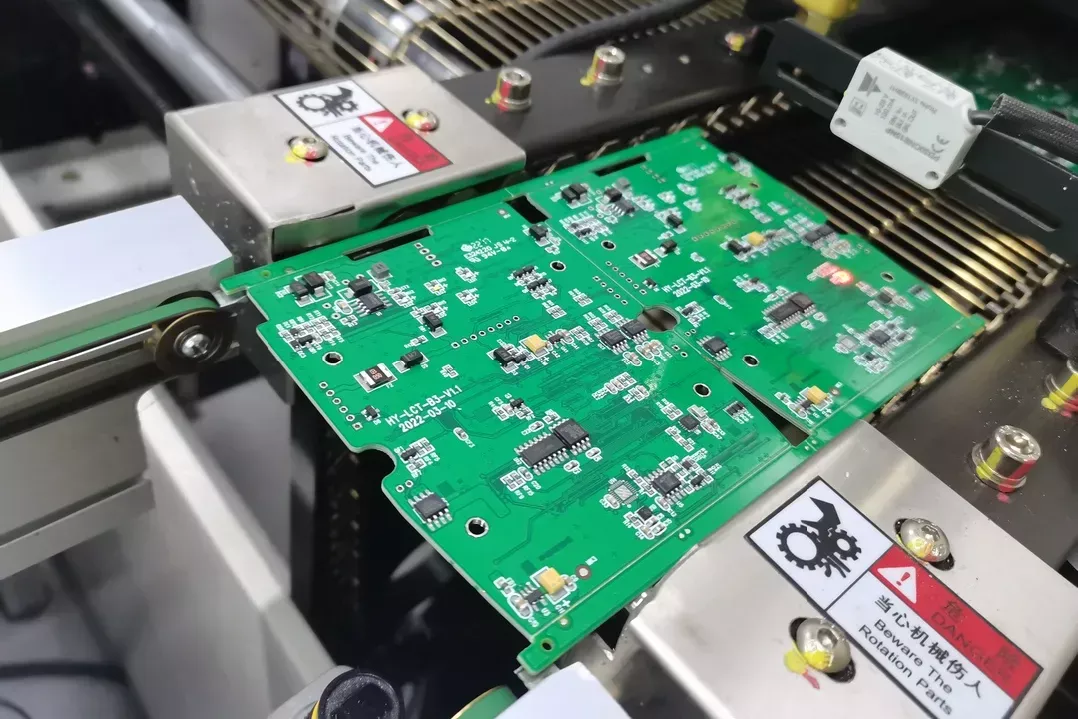
SMT placement, also called surface mount technology, is the most popular process in electronic assembly today. It offers high precision, low weight and small footprint, meeting the miniaturisation requirements of modern electronics. To achieve this precision and production efficiency, component requirements become stricter as process requirements rise.
1. Component layout design
SMT production equipment is fully automatic, high precision, high speed and high density, and during soldering both the components and the PCB pass through the reflow oven. This places strict demands on component outline, dimensional accuracy, mechanical strength, high-temperature resistance and solderability — in short, the requirements of placement, solderability and solder-withstand capability must be met.
Layout must be designed around the characteristics and requirements of the specific SMT equipment and process. Different processes such as reflow and wave soldering require different layouts, and double-sided reflow imposes different requirements on the A side and B side.
2. Even distribution
The basic requirement is that components be distributed as evenly as possible on the PCB. Heavy components have a large thermal capacity, and concentrating them locally may cause insufficient local temperature and cold solder joints; even distribution also helps balance the centre of gravity, reducing the risk of damage to components, plated holes and pads during vibration and shock testing.
3. Component orientation for reflow
The orientation of components must consider the direction the board enters the reflow oven, so that both terminations of two-terminal chip components and the leads on both sides of SMD devices are heated simultaneously.